A damaged or poorly functioning door can affect your home’s security, comfort, and energy efficiency. When such problems arise, many homeowners wonder whether door repair or replacement is the smarter option. Understanding the difference between Door repair and replacement can help you make a practical and cost-effective decision. Today, we will go into the details of both options to help you pick the right one
one.
Why Addressing Door Problems Early Matters?
Fixing door issues early can help avoid a whole host of problems, as described below.
1. A Damaged Door is Risky
A damaged door can compromise home security if left unaddressed.
2. Loss of Energy
According to the US Department of Energy, leaks around windows and doors can account for 20% to 30% of a home’s heating and cooling energy loss, often leading to higher utility bills. That’s why gaps, cracks, or worn seals around doors should be fixed quickly.
3. Negative Effect on Curb Appeal & Interiors
A worn, damaged, or outdated door can significantly affect how your home looks from the outside. Cracks, peeling finishes, or visible damage may reduce curb appeal and create a neglected appearance. Inside the home, damaged doors can allow drafts, dust, and noise, making interior spaces less comfortable and inviting.
Picture of Old Shed
Common Door Problems Homeowners Experience
Over time, doors can develop several common problems that affect how they function, look, and protect your home.
1. Door Doesn’t Close Properly
A door that doesn’t close properly is a common issue for many homeowners. It may stick, drag on the floor, or fail to latch securely. This can happen due to loose hinges, humidity-related swelling, or slight frame misalignment.
2. Drafts Around the Door Frame
Drafts around the door frame are usually caused by worn weatherstripping, small gaps, or slight warping. These openings allow outside air to pass through, indicating the door is no longer sealing properly.
3. Cracks, Scratches, or Minor Surface Damage
Small cracks, scratches, or dents are common door issues caused by everyday use, moving furniture, or weather exposure. While these are often cosmetic, they can worsen over time. Such damage can let moisture seep in, leading to warping, swelling or further deterioration.
4. Loose Hinges and Hardware Issue
Loose hinges, screws, or door hardware can affect how smoothly a door opens and closes. Over time, they may loosen, causing sagging or misalignment leading to gaps, sticking or latching issues.
5. Worn Weatherstripping
Weatherstripping can wear out over time due to regular use, temperature changes, and exposure to moisture. When it cracks, flattens, or loosens, it can no longer seal the door properly.
When is Door Repair the Best Solution?
Door repair is often a better choice when problems are limited and the door is still structurally sound, as in the situations described below.
1. Minor Structural or Cosmetic Damage
Surface-level damage, such as cracks or dents, can typically be repaired without replacing the door.
2. Hardware Issues
Problems with handles, locks, hinges, or latches are usually isolated and don’t require a full door replacement. These components can wear out over
time, but are relatively quick and affordable to fix.
3. Small Alignment or Frame Problems
Minor alignment issues, such as sticking or dragging doors, can usually be fixed with simple adjustments.
4. Weatherstripping or Seal Replacement
Replacing worn weatherstripping is a simple, cost-effective repair that helps restore proper sealing around the door. It improves insulation and ensures the door functions efficiently without requiring full door replacement. Want to get your door repaired? Contact us today for door repair.
When Door Replacement is the Best Solution
When the damage compromises the door’s structure, safety, or efficiency, replacing it becomes a more practical choice.
1. Severe Structural Damage
When a door has significant cracks, deep warping, or its internal structure has been compromised, repairing it is of no use since it can’t provide the same level of protection. In such cases, replacement is the better option.
2. Rotting Wood
Wooden doors exposed to moisture over time can develop rot, which weakens the material from within. Unlike surface damage, rot spreads and affects the door’s strength and stability. Once it reaches a certain point, repairs may only provide temporary solutions, making full replacement a better choice.
3. Security Concerns
If the door’s frame, lock area, or core material is compromised, it can pose a serious security risk. According to FBI’s Crime Reporting data, a large percentage of burglaries involve forced entry. A damaged door can become an easy entry point for break-ins. That’s why replacing a weakened door is a much better option to protect your home.
4. Poor Energy Efficiency
If drafts persist even after repairs such as sealing or weatherstripping, it often indicates deeper structural or insulation issues. In such cases, replacing the door becomes a more effective long-term solution.
5. Repeated Repairs Not Solving the Problems
If the same issue keeps returning despite multiple repairs, it’s often a sign that the door has reached the end of its usable life. In such cases, door replacement becomes a necessity. Looking to replace it? Contact us today to replace your Door.
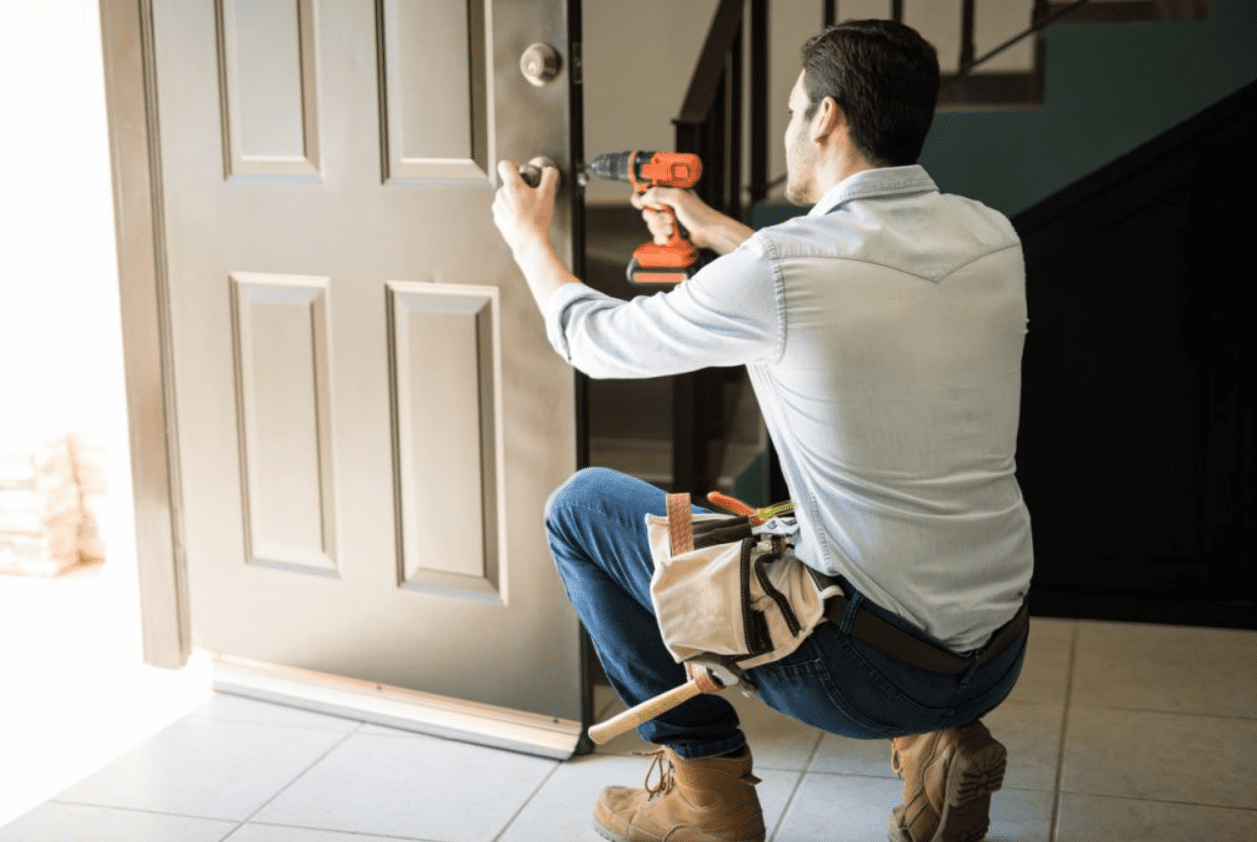
Handyman Door Lock Repair
Repair vs Replacement: Key Factors to Consider
Apart from the issues you’re facing with your door, there are a handful of other factors to consider when choosing between door repair vs. replacement.
1. Age and Condition of the Door
Older doors with visible wear, recurring issues, or weakened structure are often better replaced, while newer doors with limited damage can usually
be repaired effectively.
2. Cost of Repairs Compared to Installing a New Door
Comparing repair costs with replacement is essential before making a decision. If repair expenses are a fraction of the new door’s cost, repair makes sense. However, if costs approach the price of a new door, replacement often offers better long-term value.
3. Door Material and Expected Lifespan
The lifespan of the door is dependent on the material from which it’s made. For example, solid wood doors may last decades with proper care, while
cheaper materials wear out faster. Understanding the material helps determine whether a repaired door will last or if replacement is the smarter investment.
4. Long-term Energy Efficiency
Energy efficiency should be considered when choosing between Repair and replacement. Older doors that lack proper insulation can lead to energy
loss, which can cost you more in the long term through higher energy bills. While minor sealing fixes can help, replacing the door with a modern, energy-efficient one can significantly improve comfort and reduce ongoing utility costs.
How a Professional Inspection Can Help You Decide?
A professional inspection can uncover structural problems that may not be visible at first glance. These problems can include internal wood rot, weakened frames, and hidden moisture damage. These issues develop gradually and worsen over time if left unaddressed. Want to opt for such a professional inspection? Contact us today for Door inspection.
Faqs
Can I Replace a Door Without Replacing the Door Frame?
Yes, you can simply replace a door without replacing the frame. It’s a good
idea to do so if the existing frame is in good condition, properly aligned, and
free from damage.
What is the Average Lifespan of a Door?
The average life of a door depends on its material and maintenance.
Wooden doors can last 20 to 30 years, whereas steel and fiberglass doors
may last 30 years or more.
Final Thoughts: Choosing the Right Option for Your Door
So, if you are confused between door repair or replacement, use the guide above to make the right decision. Don’t want to spend a long time figuring it out? Contact us for Door Repair Or a replacement inspection, and we can provide you with a professional opinion.